







应用领域
深耕工业内窥镜技术,以高清可视化赋能多行业精准检测与安全运维
|
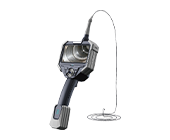
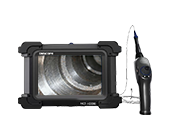
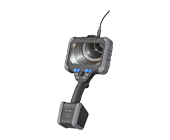
AerospaceIndustrial endoscopes play an indispensable role in the aerospace field. By providing precise and efficient non-destructive testing methods, they offer a solid guarantee for the safety and reliability of aircraft. The core role of industrial endoscopes in aerospace In the aerospace field, the core role of industrial endoscopes is mainly reflected in the non-destructive testing of the internal conditions of engines and other key components. As a highly complex and precise thermal machine, the core components of an aero engine, such as the compressor, turbine blades and combustion chamber, are constantly exposed to extreme environments of high temperature, high pressure and high speed during operation, which makes them prone to defects such as cracks, erosion and carbon deposits. These defects are located inside the engine and cannot be detected through external observation. However, the slender and flexible insertion tubes of industrial endoscopes can reach deep into the engine through specific inspection holes, allowing inspectors to directly examine the surface conditions of these critical areas and promptly identify potential hazards. In addition, during the final assembly of spacecraft, industrial endoscopes are also used to inspect and remove any screws, debris and other foreign objects that may remain in the complex and dense cabin structure. Through their precise measurement functions, they assist in measuring the assembly clearance in certain blind spots to ensure installation accuracy. The significant advantages that industrial endoscopes bring to the aerospace field The application of industrial endoscopes has brought significant advantages in multiple aspects to the aerospace field. Its primary advantage lies in achieving non-destructive testing without disassembling the engine or dismantling the cabin structure. This minimizes the disassembly and assembly damage to precise and expensive components, while significantly reducing the time required for inspection and maintenance. It is of great significance for ensuring flight punctuality and improving the operational efficiency of aircraft. Secondly, it has an efficient and precise detection capability. Modern industrial endoscopes integrate high-resolution cameras and advanced image processing technology, capable of providing bright and clear internal images. More importantly, the introduction of advanced functions such as stereoscopic measurement and 3D modeling enables inspectors not only to qualitatively observe defects but also to conduct precise quantitative measurements of cracks, corrosion, tip clearance, etc., providing reliable data support for assessing the degree of damage and formulating repair plans. Furthermore, its excellent environmental adaptability and portability ensure stable operation under all kinds of harsh conditions. Professional industrial endoscopes are designed to be robust. The insertion tubes usually have the characteristics of being waterproof, oil-proof and corrosion-resistant. Some models can also operate normally in certain high-temperature environments, making them suitable for scenarios such as engine inspection. Meanwhile, some ultra-portable models are very light in weight, making it convenient for inspectors to carry them to high-altitude work platforms or narrow hangar Spaces for efficient inspection of hard-to-reach parts such as helicopter rotor systems. In conclusion, industrial endoscopes, with their flexible, in-depth, intuitive, accurate and non-destructive testing features, have become one of the key technical tools for ensuring aerospace safety. It is not only an important means in daily maintenance and regular inspection, but also plays an increasingly significant role in promoting the precision of fault diagnosis and enhancing the operational efficiency of aircraft. |


