







应用领域
深耕工业内窥镜技术,以高清可视化赋能多行业精准检测与安全运维
|
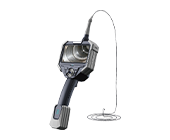
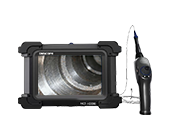
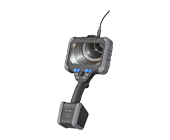
Additive Manufacturing (3D printing)In the field of additive manufacturing (3D printing), industrial endoscopes play an irreplaceable role in quality inspection. Essentially, it is a non-destructive testing tool that can act like a "X-ray eye", allowing inspectors to directly observe the internal structure and condition of parts. For 3D-printed workpieces with complex internal flow channels or closed cavities (such as fuel nozzles of aerospace engines, conformal cooling molds, etc.), traditional inspection methods are often at a loss. However, the slender and flexible probes of industrial endoscopes can easily penetrate them and perform intuitive visual inspections. Its core functions are mainly reflected in the following aspects. First of all, internal defect identification and assessment are carried out. It can accurately detect defects such as internal pores, incomplete fusion, residual powder and cracks produced in typical processes like laser powder bed melting. Secondly, it provides a direct basis for process optimization. Through the real internal images captured by the endoscope, engineers can trace the root cause of defects, thereby adjusting the printing parameters, optimizing the support structure or improving the post-processing procedures in a targeted manner. Finally, it has greatly enhanced the standardization level of quality control. By relying on a unified industrial endoscope inspection spectrum standard, different units or departments can make consistent judgments on inspection results, ensuring the reliability and traceability of product quality. The advantages of industrial endoscopes in additive manufacturing are very prominent. Its primary advantage lies in the realization of non-destructive testing, which enables internal quality inspection without the need to cut or damage expensive complex components, perfectly preserving the structural integrity of the parts. Secondly, it has the ability to make precise qualitative judgments. Combined with the increasingly improved defect map, it can effectively distinguish different types of defects, providing key evidence for subsequent handling and responsibility determination. In addition, this detection method is intuitive and efficient, capable of quickly identifying problems, significantly shortening the detection cycle, and ultimately helping to reduce the overall cost by improving the product qualification rate. In conclusion, industrial endoscopes serve as a crucial bridge connecting additive manufacturing design and quality verification. It can not only identify potential hazards within the product but also feed them back to the production front end, driving continuous process improvement. It is an important guarantee for ensuring the reliability of complex 3D printed parts and promoting the large-scale application of this technology in high-value fields. |


